

en
Киран Сетия
ru
- 2
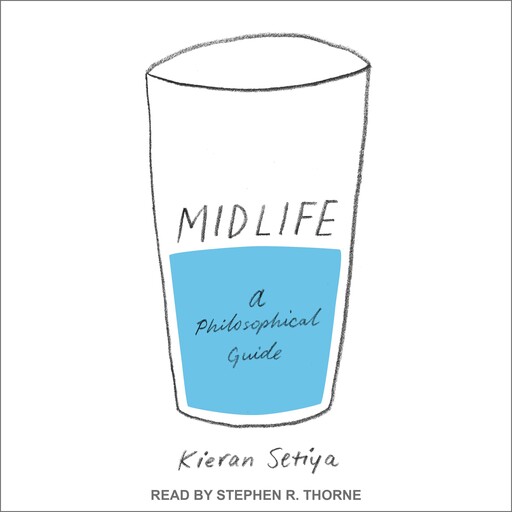
Kieran Setiya is a British philosopher who works in ethics, epistemology, and philosophy of mind. He is best known for Midlife: A Philosophical Guide (2017) and Life Is Hard (2022).
Kieran Setiya was born in Hull, UK. He later built an academic career in philosophy. He became a professor of philosophy at the Massachusetts Institute of Technology. His research centres on ethics, epistemology, and philosophy of mind. He also serves as co-editor of Philosophers' Imprint.
His first listed book was Reasons without Rationalism (2007), published by Princeton University Press. He then wrote the article Intention for the Stanford Encyclopedia of Philosophy, first published in 2009. He followed with Knowing Right from Wrong (2012), published by Oxford University Press. Practical Knowledge (2016), also from Oxford University Press, came next. In 2017, Setiya published Midlife: A Philosophical Guide with Princeton University Press.
Alongside academic work, Setiya has written for outlets including the Los Angeles Review of Books, the Times Literary Supplement, and The New York Times. He has also worked in public philosophy through a podcast. He hosts Five Questions, where he asks philosophers five questions about themselves.
In 2022, Setiya published Life Is Hard with Riverhead Books in the US and Hutchinson Heinemann in the UK. In an interview that year, he said the book began with chronic pain. “My personal way into the book was through my experience of chronic pain,” he said. He framed it as a shift in aims. “The question has to be not what is the ideal life, but what’s a good life in these circumstances?” he said. He also recalled a moment of envy towards people who looked pain-free. He then checked the thought. “I have absolutely no idea what these people are going through,” he said. He added that hardship is widespread, even when it is not seen.
Kieran Setiya also advanced a claim regarding values and self-help. He stated that living well involves being in touch with reality. Setiya rejected passive comfort as a complete solution. He continued: 'We should protest against things even when we can't control or change them.' In the same interview, he described moral effort as necessary but limited. He acknowledged that a sense of lack could be 'inevitable' in an unjust world, yet emphasised that action on a smaller scale still matters.
Photo credit: www.ksetiya.net
Kieran Setiya was born in Hull, UK. He later built an academic career in philosophy. He became a professor of philosophy at the Massachusetts Institute of Technology. His research centres on ethics, epistemology, and philosophy of mind. He also serves as co-editor of Philosophers' Imprint.
His first listed book was Reasons without Rationalism (2007), published by Princeton University Press. He then wrote the article Intention for the Stanford Encyclopedia of Philosophy, first published in 2009. He followed with Knowing Right from Wrong (2012), published by Oxford University Press. Practical Knowledge (2016), also from Oxford University Press, came next. In 2017, Setiya published Midlife: A Philosophical Guide with Princeton University Press.
Alongside academic work, Setiya has written for outlets including the Los Angeles Review of Books, the Times Literary Supplement, and The New York Times. He has also worked in public philosophy through a podcast. He hosts Five Questions, where he asks philosophers five questions about themselves.
In 2022, Setiya published Life Is Hard with Riverhead Books in the US and Hutchinson Heinemann in the UK. In an interview that year, he said the book began with chronic pain. “My personal way into the book was through my experience of chronic pain,” he said. He framed it as a shift in aims. “The question has to be not what is the ideal life, but what’s a good life in these circumstances?” he said. He also recalled a moment of envy towards people who looked pain-free. He then checked the thought. “I have absolutely no idea what these people are going through,” he said. He added that hardship is widespread, even when it is not seen.
Kieran Setiya also advanced a claim regarding values and self-help. He stated that living well involves being in touch with reality. Setiya rejected passive comfort as a complete solution. He continued: 'We should protest against things even when we can't control or change them.' In the same interview, he described moral effort as necessary but limited. He acknowledged that a sense of lack could be 'inevitable' in an unjust world, yet emphasised that action on a smaller scale still matters.
Photo credit: www.ksetiya.net
godine života: 7 februara 1976 – predstavlja
Audio-knjige
- nedostupno
fb2epub
Prevucite i otpustite datoteke
(ne više od 5 odjednom)